NEURODIVERGENT RISING

We Were NeverBroken.

Discover how a lifetime of being misunderstood and taught to distrust yourself has shaped your life.

Dismantle the conditioning that taught you to see your differences as disorder—and reclaim your ways of knowing, sensing, and being without apology.

Join the January cohort

January 11, 2027 · Early-bird pricing ends December 17

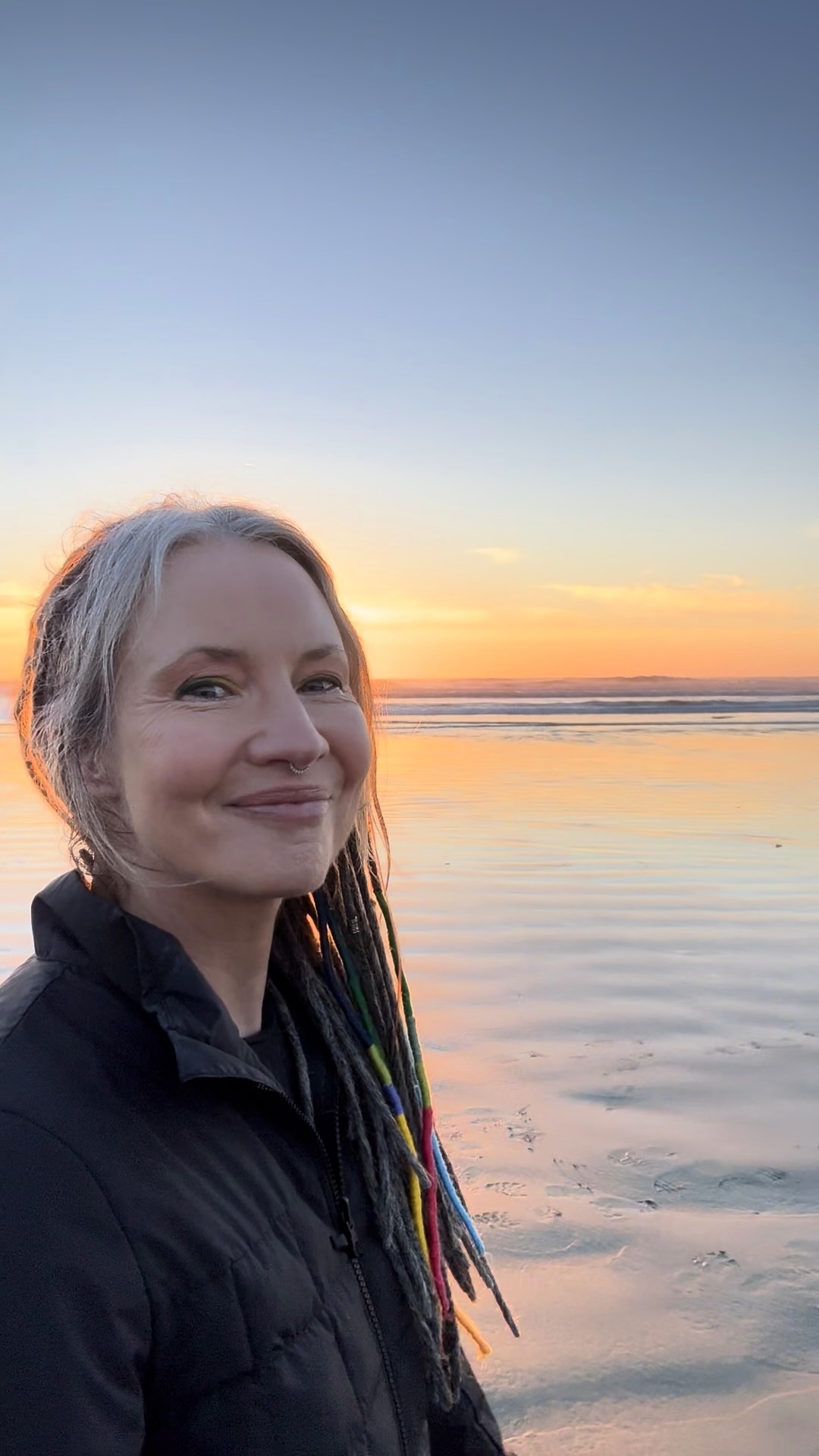
Kristina Kyser at the ocean at sunset, with her colorful hair visible.
“I spent my whole life carrying shame for who I was and never understanding it.I have come home to myself.I’ve never met myself before and I feel like I’m actually meeting myself.”
— Sage R., USA

Have you spent your life trying to figure out the rules for being human?

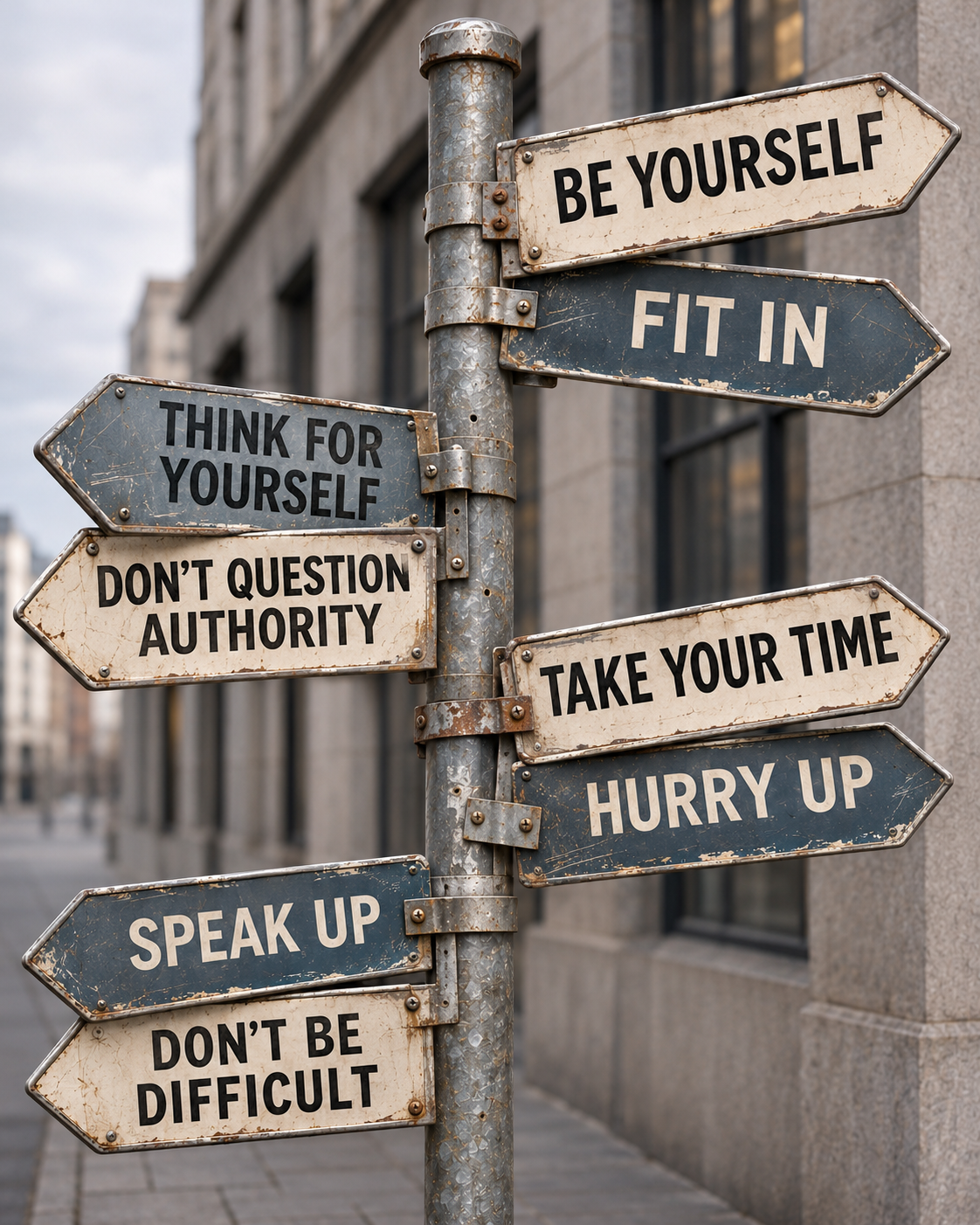
Weathered urban signpost with contradictory signs: Be Yourself and Fit In; Think for Yourself and Don’t Question Authority; Take Your Time and Hurry Up; Speak Up and Don’t Be Difficult. The arrows in each pair point in the same direction.

Do you sometimes feel like everyone else received an instruction manual you somehow missed?

You try so hard to get things right. But the rules seem to contradict each other—and somehow, you’re the one who gets blamed.

You study other people, trying to work out the invisible social code. Yet even when you think you’ve done everything right, you still get a response you don’t understand.

You replay conversations, wondering why your honesty was interpreted as rudeness, your questions as defiance, or your intensity as too much.

You push yourself through exhaustion, trying to meet expectations that seem effortless for everyone else. When you can’t keep up, you wonder if you really are lazy, undisciplined, or incapable.

You learn to hide yourself, carefully monitoring your expressions, suppressing your needs, and imitating others—yet still feel like an outsider, even among people you love.

And somewhere along the way, you begin to believe that everyone else knows how to be human—and there’s something fundamentally wrong with you.

Kristina at the beach at sunset, wearing a denim jacket with her colourful locs visible.

THE STORY BEHIND NEURODIVERGENT RISING

I spent decades believing I was broken, too.

Hi, I’m Kristina.

For most of my life, I believed I was too sensitive, too volatile, too complicated, and fundamentally unsuited to society.

I worked with professionals. I became a psychotherapist myself. And still, I couldn’t understand why things that seemed effortless for other people were so difficult for me.

Everything changed when I discovered I was autistic and ADHD at 50.

But my diagnosis didn’t suddenly awaken me to systemic injustice. It revealed how deeply I’d internalized the very systems I’d spent my life questioning.

I’d learned to see my sensitivity, intensity, and ways of knowing through a neurotypical lens. Parts of myself had become so buried beneath shame that I could barely recognize them.

What followed was a profound psychological, political, and spiritual reckoning with everything I’d been taught to believe about myself.

Neurodivergent Rising grew out of that reckoning—but it could never have emerged from my experience alone.

At its heart are the voices, lived experiences, and wisdom of dozens of neurodivergent people. I created the curriculum, but their stories, perspectives, and knowledge are its heart and soul.

I created Neurodivergent Rising so we could unlearn the shame that taught us to distrust ourselves, reclaim our ways of knowing, and discover what belonging without masking feels like.

What if the problem was never you?

Why years of therapy and self-improvement can leave you really good at pleasing others—and more disconnected from yourself.

How productivity, compliance, and desensitization became measures of a “normal” brain—and taught you to distrust yours.

What becomes possible when the sensitivity, intuition, pattern recognition, and intensity you learned to suppress become sources of wisdom, creativity, and connection.

What connection feels like when the ways you move, speak, and express yourself are the very things people recognize and delight in.

Come home to yourself.
Find your people.

Live weekly gatherings with Kristina

Unmasking can bring relief, rage, grief, and new possibilities. You don’t have to navigate it alone.

In an international neurodivergent community, explore what comes up, ask questions, and be with people who recognize your experience from the inside.

Neurodivergent Rising not only supported me to unshame and empower myself. Most importantly it helped me find a community of like-minded folk where we hold and support each other while coming back home to ourselves. This is the real treasure.”

— Florian S., Belgium
See enrollment options

What we uncover.

From the systems that taught you to distrust your differences to the intelligence of your own body: nine modules to question what you’ve been taught, reconnect with your own knowing, and integrate what you discover into your life.

Each module brings teaching, reflection, and integration together. Explore the tiles for the full curriculum.

Join the January cohort

MODULE 01

Unmasking the World

Before we can truly understand neurodivergence, we must first question the systems that define it. Module 1 invites you to reverse the clinical gaze and explore how patriarchy, capitalism, and colonization shape society’s view of difference and decide who is labeled “disordered.”

Through guided practice, presence, and collective reflection, we begin the deep work of unmasking not just ourselves, but the world that tells us who we have to be.

Jason Secord joins us to share a trauma-informed approach to reconnecting with your body and breath, helping you remember what you’ve always known beneath the masks.

MODULE 02

What Autism Is

Autism is not a list of deficits. It is a different way of sensing, processing, relating, and moving through the world. In Module 2, we dismantle narrow stereotypes and clinical myths, replacing them with a fuller picture grounded in autistic lived experience.

We explore autism from the inside out, including sensory intensity, bottom-up processing, masking, burnout, and the ways autistic people can inhabit a different perceptual reality from allistic people. Guest teacher Danielle Aubin, founder of My Autistic Therapist, introduces perspectives including Intense World Theory and reframes many so-called autistic “traits” as adaptive responses to an amplified sensory and emotional world.

Whether you’re autistic yourself, supporting an autistic loved one, or seeking to deepen your professional practice, this module invites you to see autism through a lens of respect, complexity, and lived truth.

MODULE 03

Out of Sync

ADHD has long been described as a problem of focus — but that story is far too small. In Module 3, we explore ADHD as a different operating system: quick-thinking, novelty-driven, deeply responsive to meaning, and often out of sync with rigid schedules, linear processes, and productivity culture.

We look at dopamine, executive functioning, time, masking, burnout, and the paradoxes of ADHD — including the ways creativity, intensity, procrastination, hyperfocus, and emotional depth can coexist. Guest teacher Alix Generous brings an AuDHD perspective rooted in lived experience and professional practice, challenging the idea that ADHD is laziness or lack of discipline and showing how much of the struggle comes from environments designed around neurotypical expectations.

The module asks a larger question: what becomes possible when you stop treating your natural rhythm as a problem to overcome and start building around the way your brain actually works?

MODULE 04

The Mask and the Mirror

For many neurodivergent people, survival has meant learning how to pass — adjusting our voices, expressions, bodies, and needs to fit what the world expects. Over time, that constant performance can leave us exhausted, disconnected, and unsure who we are beneath the mask.

Module 4 explores the cost of camouflage, people-pleasing, fawning, burnout, and the ways race, gender, disability, and other identities can intensify the pressure to perform. We also look at unmasking as a gradual, safety-based process — not ripping everything away, but learning where and how it becomes possible to live more truthfully.

Guest teacher Akeyl Senior brings a powerful perspective on masking and code-switching in the context of anti-Black racism, dignity, rest, and reclaiming voice. Kris McElroy, a biracial Black, trans, autistic, physically disabled artist and parent, speaks from the intersections of identity and survival, offering an embodied account of what it means to unmask slowly, safely, and on your own terms.

This is a module about coming home to yourself — with more choice, more self-trust, and less pressure to disappear.

MODULE 05

The Science of Divergence

Module 5 asks what the clinical gaze allows us to see — and what it teaches us to overlook. For many neurodivergent people, the body has been treated as unreliable, something to manage, control, or “fix.” We explore the body as a source of intelligence and ask what changes when we understand human life through relationship, rather than reducing it to isolated symptoms or mechanisms.

Dr. Diana Kopua brings one of the most radical reframes in the course. A Māori psychiatrist and founder of Mahi a Atua, she challenges the colonial foundations of Western psychiatry and offers an Indigenous framework for understanding distress through whakapapa, story, land, ancestry, relationship, and purpose. Her work asks us to reconsider what healing is, who gets to define illness, and what becomes possible when struggle is understood not as proof of brokenness, but as a source of knowledge, meaning, and collective transformation.

Alongside this reframe, we explore sensory processing, bottom-up perception, and the metabolic cost of navigating a world built for different bodies. These questions about nervous-system experience sit within a larger inquiry into the limits of Western materialist models: what is lost when mind is separated from body, a person from their community, or human life from the living world?

This module invites us to reconsider both the science of divergence and the frameworks through which we interpret it — making room for relational and Indigenous understandings of life and healing, and for forms of knowledge that the clinical gaze has too often dismissed.

MODULE 06

Who Gets to Speak?

In a world obsessed with speed, output, and verbal fluency, brilliance that doesn’t fit those molds is too often overlooked or erased. Module 6 challenges the idea that worth is tied to productivity — and asks what happens when we expand our definitions of intelligence.

We’ll explore how capitalism privileges certain ways of thinking, speaking, and creating, while dismissing nonverbal and alternative forms of expression. Together, we’ll unpack the harm caused by functioning labels, and consider how we might build systems that honor every form of contribution.

Gregory Tino brings the perspective of a nonspeaking autistic advocate whose access to spelling transformed his ability to communicate with the world around him. His contribution challenges assumptions about intelligence, speech, and competence, and makes the case for presuming competence rather than requiring nonspeaking people to prove it. Gregory also speaks directly about the need for schools, services, and workplaces to recognize alternative forms of communication so that dignity and participation are not reserved for people who communicate in neurotypical ways.

This is about more than being heard — it’s about making sure everyone’s way of communicating is valued.

MODULE 07

Unruly and Hysterical

Throughout history, certain traits (sensitivity, intuition, emotional depth) have been labeled dangerous when they challenge the status quo. For autistic women, girls, femmes, as well as trans and non-binary people, these traits have often been misdiagnosed, punished, or erased.

In Module 7, we trace the lineage from witch trials to “hysteria” to modern psychiatric labels, revealing how patriarchy and psychiatry have pathologized feminine-coded and gender-divergent expressions. Together, we’ll explore the cost of this silencing and the fire that comes from reclaiming what was once shamed.

Author and visionary Lucy H. Pearce offers a passionate perspective on the wild feminine, the healing power of creativity, and what it means to stand unapologetically in your truth.

The world has always tried to quiet certain voices. This is where we remember why they must be heard.

MODULE 08

The Normal Illusion

Colonization is more than the theft of land. It’s the theft of memory, rhythm, and relationship with the body. Module 8 uncovers how global systems of domination have severed us from Indigenous knowledge, pathologized emotional expression, and erased neurodivergent ways of sensing and being.

We’ll center Black and Indigenous neurodivergent experiences, exploring the overlapping impacts of masking, code-switching, and cultural erasure under colonial rule. Through this lens, we’ll begin to see how reconnecting to our embodied knowing can be an act of both personal and collective liberation.

Sabia Wade brings a powerful perspective on somatic liberation, community healing, and the role of the body as a site of resistance and wisdom.

To reclaim ourselves, we must also reclaim the stories, rhythms, and truths that colonization tried to take.

MODULE 09

Integration and Application

Every journey has a moment when we pause, look back at the ground we’ve covered, and decide what we’ll carry forward. Module 9 is that moment — a space to integrate the learning, honor what has changed, and begin translating the course into the life you are actually living.

A central part of this module is my conversation with my son, Sasha Kyser-Burke. Together, we explore undiagnosed neurodivergence across generations, the ways children can be misunderstood when families lack neurodivergent language, and how sensitivity, hyper-empathy, addiction, violence, caretaking, and self-erasure can travel through family systems.

The conversation is also about repair: what becomes possible when we can name harm without collapsing into shame, understand the nervous systems beneath old patterns, and choose accountability instead of repetition. The module invites you to reflect on your own lineage — whether you are parenting, re-parenting yourself, or doing both — and to consider what you want to carry forward differently.

We also return to advocacy, accessibility, and the practical tools that help bring this work into relationships, healthcare, family life, and the workplace.

This isn’t simply an ending. It is where insight becomes inheritance — and where you begin choosing what continues through you, and what does not.

Nine neurodivergent teachers. Nine perspectives from the inside.

Neurodivergence cannot be understood through a single lens. Learn from nine neurodivergent educators whose lived experiences, professional knowledge, and distinct perspectives challenge what we’ve been taught about ourselves.

Explore each portrait to meet the teacher and their work.

What becomes possible.

“This course is revelatory. Scientifically informed and profoundly anti-empire and anti-racist. The spiritual component to this course speaks to my soul. I am more than the shame that was stamped into me.”

— Fede N., IranNeurodivergent Rising participant

“I’m feeling super empowered in a multi-layered way… I’m starting to see myself from outside myself in a different way, and that feels revolutionary.”

— Kim M., USANeurodivergent Rising Graduate
Join the January cohort

January 11, 2027 · Early-bird pricing ends December 17

Early-bird pricing: save $222 until December 17

Six months of course and community access beginning January 11, 2027.

Total: $777 USD for full, three-, or six-payment options; $776.97 USD for nine payments.

Payment plans begin at purchase. The nine-payment plan continues beyond the six-month access period.

For neurodivergent and questioning adults, parents, partners, and educators. No formal diagnosis required.

Learning.
Reflection.
Connection.

Six months to learn, integrate, and come home to yourself in community.

  • Weekly live gatherings with KristinaA central part of NDR: space to explore the teachings together, ask questions, and be understood, supported, and celebrated by a growing international community.
  • The complete nine-module curriculumNine pre-recorded teaching sessions with Kristina, for self-paced study.
  • Nine guest sessionsTeachings with international educators and advocates.
  • Resources for deeper inquiryCurated media, essays, resources, and reflection/integration practices.
  • Six months of accessReturn to course materials and recordings as your understanding grows.

FAQ

Do I need a formal diagnosis?

No. Many participants are self-identified, questioning, or exploring neurodivergence for the first time. The focus is lived experience, not diagnostic status.

When can I join?

The next cohort begins January 11, 2027. NDR includes six months of access to the nine-module course and community. Weekly live gatherings with Kristina are a central part of the experience: a place to explore the teachings together, ask questions, and be understood and supported.

How much time should I allow?

If you choose a weekly rhythm, allow around three hours of video, plus optional reflection and readings. You can spread this out over your six months of access. There are no required assessments in standard NDR.

NEURODIVERGENT RISING

We’ve spent enough of our lives trying to be someone else.

It’s time to come home to our own knowing and to connect with the people who recognize and celebrate who we are beneath the mask.

Nine modules · Weekly live gatherings · Six months of course and community access
Join the January cohort

Begins January 11, 2027 · Early-bird pricing ends December 17, 2026

Dr. Diana Kopua

GUEST TEACHER

Dr. Diana Kopua

Psychiatrist and Educator

Diana Kopua (Ngāti Porou) is an Indigenous psychiatrist and storyteller challenging how mental health systems work. Through Mahi a Atua, she and her whānau transform workforce development into system healing. By reconnecting people to ancestral stories, relationships and creative ways of leading, they help workers and communities thrive so the systems they shape can truly change.

Sabia Wade

GUEST TEACHER

Sabia Wade

Author & Reproductive Justice Educator

Sabia Wade (they/them) is a Black, queer, disabled educator, author, and reproductive justice leader whose work sits at the intersections of race, disability, capitalism, embodiment, and liberation. In NDR, they explore the conditioning that teaches us to overwork, perform, and earn our right to rest — and offer a different model rooted in integrity, reciprocity, embodiment, and shared liberation.

Lucy Pearce

GUEST TEACHER

Lucy Pearce

Author, Educator & Artist

Lucy (she/her) is an autistic author (Burning Woman, Creatrix, She of the Sea), artist, and founder of Womancraft Publishing. She writes and teaches on feminine power, cyclical living, and neurodivergent creativity. Lucy brings fierce wisdom to the intersection of patriarchy, sensitivity, and unmasking. Lucy joins us via prerecorded interview.

Kris McElroy

GUEST TEACHER

Kris McElroy

Artist, Special Olympian and Advocate

Kris (he/they) is a biracial, multiply-disabled, autistic trans artist and writer whose work explores identity, internalized oppression, and embodied liberation. Through storytelling, painting, and advocacy, Kris invites transformative conversations around race, gender, disability, and the sacred work of unmasking.

Akeyl Senior

GUEST TEACHER

Akeyl Senior

Abolitionist Thinker, Cultural Critic and Advocate

Akeyl (he/him) is a Black, disabled father, cultural critic and abolitionist thinker whose work calls out the violence of capitalism, white supremacy, ableism and patriarchy. Through sharp political analysis and embodied truth-telling, he challenges oppressive systems, speaks to the importance of collective liberation, and brings focus to men's health and emotional accountability.

Alix Generous

GUEST TEACHER

Alix Generous

Neurodivergent Consultant & Advocate

Alix Generous (she/they) is a neurodivergent advocate and storyteller, championing disability justice and systemic change with clarity, creativity, and courage. She is well-known for her TED talk and her sense of humour.

Danielle Aubin

GUEST TEACHER

Danielle Aubin

Licensed Social Worker, Advocate, Educator

Danielle (she/they) is an autistic therapist and the creator of My Autistic Therapist, a platform offering education, insight, and support through a neurodivergent-affirming lens. Her work sheds light on masking, trauma, and the power of embracing autistic identity.

Jason Secord

GUEST TEACHER

Jason Secord

Yoga Teacher & Embodiment Guide

Jason (he/him) is a neurodivergent longtime yoga practitioner and teacher who leads participants into deep nervous system attunement to access presence, breath, and inner power.

Gregory C. Tino

GUEST TEACHER

Gregory C. Tino

Autistic Advocate, Writer, Nonspeaking Communicator

Gregory C. Tino is a nonspeaking autistic advocate who began spelling on a letterboard to communicate in 2017. He is dedicated to educating the public about the strengths, inner life, and dignity of nonspeaking autistic people.